Showing posts with label Books. Show all posts

Wednesday, 4 January 2017

Chop's Book of 2016

Second year in a row I've failed to read enough books to put together a reasonable Top 5 so just a book of the year choice. I have a pile of books to get through and Christmas just made that quite a bit bigger so I'm really going to try and knuckle down and read more in 2017.

I Formed A Band by Eddie Argos


The story of how Eddie Argos formed the band Art Brut with a group of pals and went on to world domination or, at the very least, medium sized indie success. If you're a fan of the band you won't be surprised to hear this is told with Eddie's flair for self deprecating humour.

The story begins with Eddie playing the vacuum cleaner on stage in Poole, and ends up with Art Brut recording Art Brut VS Satan with Black Francis in Salem, Oregon. In between there are a series of some of the funniest rock anecdotes you're likely to read.

.

Friday, 22 January 2016

Chop's Book of 2015

Err, you'll notice this isn't a Top 5. That's because I only read five books all year and, although I enjoyed most of them, I didn't think it was fair to list them as a legitimate Top 5. There was one book though that I could not leave unheralded.

Chop's Book of the Year 2015

Clothes, Clothes, Clothes. Music, Music, Music. Boys, Boys, Boys by Viv Albertine

The Slits weren't like other punk bands. Not just because they were all girls (well, most of them) but because they had a different approach to making music. Whilst the boy punk bands could be thrilling and appeared to be ripping up the rule book, musically they were still following a fairly standard path. The Slits on the other hand really forged their own path.

Similarly, Viv's style of writing in her autobiography is a breath of fresh air. In the first sentence of her introduction she states that "Anyone who writes an autobiography is either a twat or broke. I'm a bit of both" and she stays close to that ability to speak truth to the very end. Chapter one is a short treatise on masturbation, it ensures you're under no allusions about the author or how she plans to tell her story.

The chapters are short and snappy and read a little like a scrapbook of memories. An approach I thought worked really well, making it very easy to read but also getting under the skin of Viv's personality in a way few other biographies I've read have managed. The pages on the early years of punk are fascinating providing an insider's view of a dramatic period in music. I was a little too young to witness this first hand but the influence of punk remains in most of the bands I love today.

When the Splits disbanded in 1982 Viv didn't follow the expected route to solo music but booked herself onto a film studies course which eventually led to her working as a freelance director. The second half of the book covers the long period when she wasn't a rock'n'roll star. She got married, had a daughter and lived a fairly normal life as wife & mother down on the south coast. She didn't pick up a guitar for a very long time and when she finally did, another moment of emancipation, it took her some time to regain her confidence in her own abilities.

In 2009 she released her first solo album, The Vermillion Border. Hearing Viv play some of those tunes in session for 6music was the spur for me to investigate her music more thoroughly. Until that point I think I only really knew the Slit's single Typical Girls. Viv's solo album is a joy and in many ways the book is a companion piece to that album.

A fabulous read that feels like a conversation with the author, one that drew me in so deep I needed a few days off before I read anything else. I think I read that Viv is writing a second book, I really hope she is as I'll be first in line to pick up a copy.

Clothes, Clothes, Clothes. Music, Music, Music. Boys, Boys, Boys. via Amazon


.

Friday, 20 March 2015

Top 5 Terry Pratchett Novels

I was really sad to hear about the passing of Sir Terry Pratchett last week. I read a lot of his books in the early nineties but nowhere near all of them. I was reading the Discworld series in chronological order, hence the cluster of dates, but gave up after realising he was writing them quicker than I could read them. Putting this together makes me feel I should pick up some of the books I've missed. If you're anywhere near reading all of them you're welcome to add you're own top five in the comments, it might even focus my future reading efforts.

1. Mort (1987) - Death has appeared in nearly every Discworld novel, sometimes only for a few lines, but Mort was the first novel where the story revolved around him. Death decides to take a holiday and employs Mort as his apprentice. Things don't go particularly well. Death is a wonderfully matter-of-fact character, which is a pretty good way of thinking about the concept really. All of Death's dialogue are printed in SMALL CAPITALS WHICH IS A SIMPLE BUT EFFECTIVE WAY OF ADDING TO THE HUMOUR. I got my Mum to read this one, she didn't really get it but it's the book I'd recommend for anyone new to Sir Terry.


2. Good Omens (1990) - The only non-Discworld novel on my list this was co-written with another of my favourite authors, Neil Gaimen. Good Omens is a comedy about the birth of the son of Satan. Having become accustomed to their lives on Earth the angel Aziraphale and the demon Crowley try to avert the end of the world. A shame that Pratchett & Gaimen didn't collaborate on another story but I do like the fact this remains a standalone story. It even features a cameo from Death.


3. Wyrd Sisters (1988) - Wyrd Sisters sees the return of Granny Weatherwax, from Equal Rites, alongside the equally formidable Nanny Ogg and Magrat Garlick. Three Witches, bubbling cauldrons and the ghost of a dead king - a few deliberate echoes of Shakespeare - all make for a great story. Granny Weatherwax is probably my second favourite Discworld character. Equal Rites was the first Discworld novel that really clicked for me and this book takes the Witches idea a little further.


4. Small Gods (1992) - A satire on religious institutions and their role in politics. A book that marked something of a shift in Pratchett's writing style to tackle weightier themes, though still managing to cram in more jokes in one book than most authors manage in their career.


5. Guards! Guards! (1989) - The first of the Ankh-Morpork City Watch stories. The City Watch are a largely ineffectual Police group who generally choose to avoid trouble rather than prevent it. This changes with the arrival of Carrot Ironfoundersson who turns them into a slightly less ineffectual Police group.


.

Friday, 23 January 2015

Top 5 Books I Read in 2014

I had a dreadful year for reading books and only managed to complete nine. This was partly deliberate as I'd intended to spend more time watching films but if I'm honest that didn't happen either so the truth is I probably frittered away the time on Twitter. I still read some good stuff and the top five are highly recommended but I will try and read more often this year, that book pile isn't getting any smaller.

1. "Mudhoney: The Sound & The Fury From Seattle" Keith Cameron - Brilliant biography of the band that were the heart and soul of SubPop records and did as much as anyone to put Seattle firmly on the musical map. Keith Cameron always writes brilliantly about music and his involvement with them both then and now mades him the perfect candidate to document a true underdog band. A fabulous read that reinvigorated my interest in the band and had me rapidly filling in the gaps in their back catalogue.


2. "God Bless You, Mr. Rosewater " Kurt Vonnegut - I'm a big Vonnegut fan but still have a long way to go to get through his canon of work. I picked this up as the kindle version was quite cheap but it's one of my favourite Vonnegut books so far. Quite short but a thoroughly absorbing read with a feelgood message.


3. "The Lowland" Jhumpa Lahiri - This was from the 2013 Booker Short List and was another very enjoyable read. Tells the story of two brothers who were born and grew up together in India but make choices that mean their futures are very different. It's a quality bit of writing that makes the most of a fairly subtle story line.


4. "Roy Hodgson - A Football Life" Richard Allen - The first (and so far only) biography of England's current manager written by Fulham author & blogger Richard Allen. I suspect it's an indication of the media's lack of enthusiasm for Hodgson as a person that means there hasn't been a flurry of books about him yet. Richard spotted this gap in the market and with a wealth of information about Roy from his time with Fulham was well placed to put this excellent book together. Initially only available on Kindle (and the catalyst for me starting to read ebooks on a regular basis) there was also a short print run and you can still get physical copies via Lulu.com. A valuable read for anyone who wants to know more about what makes Hodgson tick and how he found his way from Maidstone to Malmo, Switzerland to Inter Milan and Fulham to England.


5. "The Great Cassette Experiment - The Joy of Cassettes!" Neil Pace - The third eBook on the list and the perfect read for my travels by public transport. A meandering journey through 130 albums on cassette. For six months the only music Neil listened to in his car was the albums he owned on the most unloved medium of music storage. A smashing collection of witty essays dissecting a real cross section of music from the Eighties & early Nineties. Neil is a particular fan of electronic music, which isn't my bag at all, but his style of writing ensured there was something of interest in every chapter, he even had me listening to albums I'd have never considered trying before.


.

Friday, 17 January 2014

Top 5 Books I Read in 2013

I didn't read as much last year, I got bogged down in a couple of books and was easily distracted (largely by Twitter if I'm honest). But, I did read some great books including a decent portion of the 2013 Booker Prize short list. Next year the Booker is opening up it's nominations to a global market. That feels a bit wrong to me but I'll still look forward to seeing what novels get selected. Whatever the merits of the prize it has introduced me to some excellent authors I doubt I'd have otherwise read though it has also forced me to read a couple of novels I've really struggled with (Will Self's Umbrella last year and Ruth Ozeki's A Tale for the Time Being this year). I intend to get through my movie backlog this year, so book numbers may well be down again, but if I only finish one book it's going to be Moby Dick which I've been dragging around with me on buses & trains all year without making any real progress.

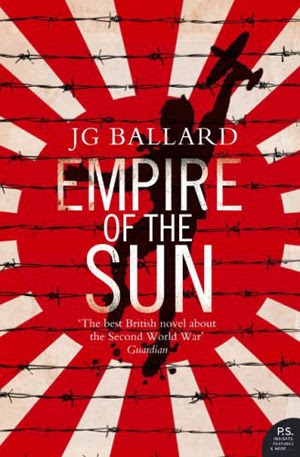
1. "Empire Of The Sun" J.G. Ballard - J.G. is rapidly rising in my list of favourite authors and this might well be his masterpiece. It actually took me quite a long time to finish, but that was more down to timing than because I found it difficult to read. It's a vivid fictionalisation of Ballard's time in Shanghai before, during and at the end of the second world war and, typically of Ballard, brings a very different perspective to the impact of war.


2. "The Unlikely Pilgrimage Of Harold Fry" Rachel Joyce - This was one of the later books I read from the 2012 Booker short list (a very fine Booker year based on the books I read) and is a genuinely heart warming tale of a man who steps out to post a letter and keeps on walking. Harold becomes something of a cult hero as people gradually become aware of his "pilgrimage". Rachel Joyce tells the tale beautifully, mixing humour with poignancy without ever sounding trite. I think I read all of the 2012 short list, bar Hilary Mantell's winning entry (something of a recurring event since I began reading Booker short lists), and this would have been my choice for a winner.


3. "Harvest" Jim Crace - My favourite of the 2013 Booker nominated novels I managed to finish (you won't be surprised to hear that I failed to read 800+ page winner The Luminaries). I've spoken to a few people who found this tough going which surprised me as I read this one fairly quickly. On the surface this is a story about an idyllic English village that falls apart due to the demand for economic progress and impact of the 18th & 19th Century Enclosures Act. However, for me, the real heart of the book is about how we react to outsiders and change.


4. "Surely You're Joking, Mr Feynman!" Richard Feynman - 2013 was the 25th anniversary of Richard Feynman's death. I'd borrowed this book from my brother-in-law the previous Christmas but the BBC film about his work on the Challenger Shuttle inquiry spurred me into reading it. And I'm very glad I did, Feynman's character oozes out of every page without ever sounding arrogant or boastful. Ostensibly a series of anecdotes about Feynman's life & work it's an easy book to dip in and out of as time allows though I found I just wanted to keep on reading it. He was obviously academically clever but also seems to have had a very sociable personality as well as a penchant for practical jokes.


5. "TransAtlantic" Colum McCann - I attempted to get a head start with the 2013 Booker Prize so began reading the long list pretty much as soon as it was announced (a big thumbs up to the Library for being able to get these books fairly easily and saving me a fortune). I worked on the basis that if I read the shortest ones first I'd have more under my belt by the time the short list was announce. That worked fairly well though I've still got a a couple of the short list to read. TransAtlantic was one of those I read early and disappointingly didn't make the short list. A little like Harvest, this is another novel with a historical setting, telling the story of three transatlantic crossings in different eras. Of course there are small threads that tie these stories together before a finale that reminds us however hard life may be there is also wonder and hope.


.

Friday, 26 July 2013

Top 5 Novels by Iain (M) Banks

I've been muddling over this topic since Iain Banks announced that he had terminal cancer. I love his books, both contemporary & science-fiction, but I'm a long way from having read all of them and wasn't sure I'd be doing the topic justice. Since Iain passed away on 9th June I realised it probably doesn't matter that I've not read everything. These top fives are rarely definitive and I wanted a way to celebrate his work.

They say you should never judge a book by it's cover. That's very true when used as an analogy for life but I'd contend it's not actually true about books. In my experience book covers are a pretty good indication of what's on the pages. Sometime in the mid-nineties, perhaps a little early, I was in a slump with my reading and looking for something new and exciting. I was doing a day-release course at college and often spent my lunch break browsing the shelves of Waterstones. I stumbled across Iain Banks' contemporary collection and was struck by the simple but effective black & white designs. The covers made me want to read the books.

1. The Wasp Factory (1984) - As is right and proper I started in chronological order with Iain's debut novel of any type. The Wasp Factory is pretty dark in places, exploring the effects of organised religion and parental deception. It's a quick read with an unexpected twist and an excellent introduction to Banks' style of writing.


2. Player Of Games (1988) - The second of The Culture series helped everything fall into place for me with Iain's science fiction. It's a shorter book than Consider Phlebas or Use Of Weapons and I found it an easier read but just as compelling. A famously skilful player of games is coerced by The Culture's Special Circumstances to travel to a far away world and play the complex game of Azad, unwittingly playing a role in The Culture's broader intentions.


3. The Crow Road (1992) - A more traditional coming of age story but one told with Banks' typical wit and dark humour. The BBC did a great job adapting this for television in 1996. Contains one of the best opening sentences you're likely to find - "It was the day my grandmother exploded"


4. Consider Phlebas (1987) - The first of The Culture series and therefore the first bit of Banks SF I read. It's a weighty tome and took me a while to get to grips with (amongst other challenges there are a lot of tricky names to remember) but it's well told and was truly different to any other Sci-Fi I'd read up to that point.


5. Walking On Glass (1985) - Brain scramblingly complex in places, but very satisfying once you get there. Walking On Glass features three parallel storylines that don't initially appear to be linked but eventually reveal subtle connections.


.

Friday, 8 February 2013

Top 5 Books I Read in 2012

2012 was a good year for books. I managed to read almost two a month, which I reckon is pretty good going by anyone's standard. 2013 may not be so fulsome as I've not even finished one yet. That total did included two kid's books (The Borrowers & the 2nd Artemis Fowl story) and a Jim Thompson novel that (I only realised halfway through) I'd read once before. I read four of the 2011 Booker shortlist (all excellent & very easy to read), three of the 2012 Booker longlist (thanks mainly to the Library), three books about music, two other non-fiction books, two books off my reading pile, one e-book (written by a pal), one Bond, one Sherlock Holmes and one Agatha Christie. I enjoyed them all though, if I'm honest, I struggled with Will Self's stream on consciousness novel Umbrella.

1. "Half Blood Blues" Esi Edugyan - A captivating story of a group of Jazz musicians caught in pre-WWII Nazi Germany, cutting the disc of their lives but then being separated by the impending war and their own fears and jealousies. This treads the line between historical fact and narrative fiction really well and provides some insight into what life at the time was like as well as being a gripping story. It's a well crafted tale that doesn't attempt to hide any truths from the reader but leaves much unsaid by it's choice of narrator. I like that this left some room for reader interpretation. I read it in under a week whilst on holiday in Cornwall which helped me get fully immersed in the lives of the characters and felt a pang of sadness when it was finished.


2. "Do It For Your Mum" Roy Wilkinson - Ostensibly the story of the band British Sea Power written by Roy, former manager and elder brother of BSP's Scott (Vocals & Guitar) and Neil (Bass & Vocals). It's typical of the band that this biography is much broader than your average Rockopic and some of it's best passages dealt with how the band's success affected the Wilkinson family, particularly their BSP obsessed Dad. Ronald Wilkinson, 87-year-old veteran of World War II, is the real star of the book. The band's biggest fan who gets frustrated as one weak indie band after another leapfrogs his boys on the rise to popularity. Better still, as Ron's appreciation of the deepest recesses of alternative music grow broader, he is constantly pushing them towards more left field explorations.


3. "Lowside Of The Road: A Life of Tom Waits" Barney Hoskyns - I'd tiptoed around the periphery of Waits' discography before reading this book. I struggled with a couple of listens of Swordfishtrombones, enjoyed Mule Variations but had only recently made a proper breakthrough thanks to Small Change. I picked this up after seeing a glowing review in Mojo and attempted (thanks largely to Spotify) to get to grips with Tom's albums chronologically as I read. This is a fine book by Hoskyns, who is clearly a huge fan, and packed with detail. It certainly proved to be the breakthrough for my enjoyment of the music and I've now filled in a lot of the gaps in my collection. I suspect I will enjoy reading this again once I've got to grips with Waits full body of work.


4. "The Sisters Brothers" Patrick deWitt - The second book on this list from the 2011 Booker shortlist, I thoroughly enjoyed this darkly comic Western though I think I'm going to struggle to explain why. Eli and Charlie Sisters are infamous assassins sent to kill Hermann Kermit Warm who is accused of stealing from their boss. There's not much plot beyond that but there are a series of short events along the journey. The story is told from Eli's perspective and it seems like he's the less cold-hearted of the two, however, there's a suggestion that he's actually the more dangerously psychotic. Hermann Kermit Warm turns out to be extremely likable and the denouement is well played out.


5. "Inverting The Pyramid: The History of Football Tactics" Jonathan Wilson - I'd heard good things about this book and when I found it for £2 in a bookshop near work I couldn't resist. A fascinating study of the development of football tactics from it's earliest days in the 19th century to the early 2000s. It's well structured to provide good chapters on the key moments in football development including the great teams like 1950s Hungary, 1970s Holland and the many eras of Brazil. Wilson writes really well, so this never feels like a scholarly discourse but nor does it stint on detail. He's also keen to point out that football success is not just about tactics. I'm now better equipped than ever to win an argument in a pub about why Fulham will only achieve success when they find a mobile central midfielder who can put his foot on the ball.


.

Friday, 23 November 2012

Guest Top 5 - Asterix Books by Gideon Coe

I'm sure you'll all be aware of Gideon Coe and his excellent radio show on BBC 6music. By luck I happened to notice Gid tweet his five favourite Asterix reads and asked if he'd mind me reproducing it here. Gideon is a gent and was very obliging. If you haven't listened to his show before you should. It's on between 9pm and 12pm Monday to Friday and also available via the BBC iPlayer, you won't regret it.

The Adventures of Asterix are a series of French comic books written by René Goscinny and illustrated by Albert Uderzo. The series first appeared in the French magazine Pilote and have subsequently resulted in a series of thirty four books. The series follows the exploits of a village of indomitable Gauls who resist the Roman occupation thanks to a magic potion that gives them super strength, brewed by their druid Getafix. I loved reading these as a kid and much preferred them to the Tin Tin stories. Asterix was a real hero, a warrior who was the best fighter in the village but also very smart. His best friend Obelix, who had permanent super strength having fallen in the cauldron as a child, was less clever but loyal. For me they represented the victory of the small people over the big and mighty.

Over to Gideon ...

1. Asterix and the Chieftan's Shield (1968)


2. Asterix and the Golden Sickle (1962)


3. Asterix in Britain (1966)


4. Asterix and Cleopatra (1965)


5. Asterix the Legionary (1967)


.

Friday, 29 June 2012

Top 5 versions of The Hitchhiker's Guide To The Galaxy

Well, it's been a while but you know how it is. The glorious summer. The exciting football tournament. The massive Fulham article that you just didn't get round to writing until it was a week overdue. I'll try and get back on track with regular updates, you'll no doubt be excited to hear I have a stack of guest top fives to publish so you won't need to wade through too much of my waffle.

This week I had the thrill of going to see a Live performance of The Hitchhiker's Guide To The Galaxy Radio Shows at the New Victoria Theatre in Woking. Hitchhiker's had as big an impact on my teenage years as Star Wars, the combination of humour and social commentary striking a chord at an impressionable time.

1. The Books (1979-92) - The second version of Hitchhiker's I obtained having enjoyed the TV series and being desperate to find out more. The original book remains one of my favourite books of all time and for a while I re-read it every year. "The Restaurant At The End Of The Universe" is not so much a sequel as the second half of the same story (elements from both made it into the TV show) and was just as hilarious as the first. My A-level English teacher almost had kittens when I included them in my list of "favourite" novels. Not suitable material for literary consideration she explained. I still think she was wrong, whilst they may not be the most challenging read, hardly a word is wasted that does not in some way lead to smartly observed humour. I found them hilarious and, most important of all, they made me want to read more often. Douglas Adams eventually produced five books in the "trilogy" and became the first author I'd purchase the day any new material came out.


2. The TV Show (1981) - My introduction to Hitchhiker's was thanks to the BBC television adaption of the Radio Show. A mere six half-hour episodes were made but these visual treats seemed light years away from anything else I'd ever seen. In particular the apparently computer generated sequences of section from the Guide itself provided a brilliant way to pull the story together and were actually pain-stakingly produced by hand using traditional cell animation techniques.


3. The Radio Series (1978-79) - The Radio Shows were the original format of the story enabled Adams' to really go to town with the story and of course set him up for years of production hell trying to get a film version off the ground. Many of the cast from the radio show went on to appear in the TV Series as well. Simon Jones as Arthur Dent, Mark Wing-Davey as Zaphod, Stephen Moore as the voice of Marvin and most distinctive of all, the wonderful Peter Jones as the voice of The Guide. Though this is really where Hitchhiker's began, I did not get hold of the recordings until several years later. At first hearing Ford Prefect & Trillian voiced by different actors to the ones I knew from TV seemed odd, but both Geoffrey McGiven & Susan Sheridan were well chosen for the parts and soon won me over.


4. The Live Show (2012) - It's over 10 years since Douglas passed away but his Hitchhiker's legacy lives on. In 2009 Eoin Colfer wrote "And Another Thing… " a very passable sixth installment of the novels and from 2003 to 2004 Dirk Maggs produced further radio adaptions of Adams' later books. It was Dirk Maggs who then came up with the idea to take the original radio cast on the road with a live tour which provided me the opportunity to laugh uncontrollably at jokes I'd heard a billion times before. It was a real pleasure to see Simon Jones, Mark Wing-Davey, Geoffrey McGivern and Susan Sheridan reunited and clearly enjoying the opportunity to perform the show in a live environment. They still have shows to play and I recommend anyone who enjoyed Hitchhiker's in any of it's formats to go and see them.


5. The Audio Books (1981) - Narrated by Stephen Moore who was a founder member of the radio series cast. Best known as Marvin the paranoid android (not only on radio but on TV and the Live show) but also the provider of voices for many other parts including the Whale that appears suddenly several miles above the planet of Magrethea, and comes to an unfortunate, but unavoidable, ending. Stephen recorded audio versions of the first four books for EMI in the early 80s. Whilst these don't have the variety and interchange of the radio shows there is something magical about Stephen's voice that I have never forgotten.


A quick postscript to mention the Film version that did eventually get made in 2005. Had I not recently seen the Live show this could happily have made my top five, it's very different from the TV version of course, but then one of the joys of the alternative versions of Hitchhiker's is that they don't always follow the exact same script and in many cases completely contradict each other.

Friday, 2 March 2012

Top 5 Books I Read in 2011

Not a vintage year on the reading front for me. I struggled with a couple of books and even those I enjoyed took me longer to finish than they would normally. I blame the allure of my smart phone and the ease of in bed internet access for this. I intend to read a lot more next year.

1. Cormac McCarthy “The Road” – The second year in a row Cormac has provided my favourite read of the year. This novel is a very different kettle of fish to “No Country For Old Men”. A tale of a father and son and their efforts to survive in a post-apocalyptic world. The sub-heading on some paperback editions call it “beautifully harrowing”, a term I think sums up the story very well. The characters find themselves in a miserable situation, living in conditions that seem dreadful yet all too possible, but McCarthy manages to retain some sense of hope throughout their journey. It is emotionally draining and there are moments where I could imagine being on the journey with them, but despite the sadness I felt at their plight and the state of the world I ended the book with an overall feeling of positivity. That said I did also feel the need to stock up on canned produce, you know … just in case. It’s not a difficult book to read at all, the words flew by for me, and once I’d started reading I didn’t want to put it down.


2. John Peel “The Olivetti Chronicles” – Whilst I enjoyed Peel’s unfinished biography it was a huge shame he did not live to complete it himself. His wife and children did a fabulous job and the book stands as a marvellous testament to Peel’s influence, but the parts written by himself are wonderfully witty and self-effacing and I felt a renewed sense of loss at the end of the self-written half. “The Olivetti Chronicles”, a collection of articles, columns and reviews for various newspapers and magazines, provided another opportunity to enjoy the man’s writing and his unique sense of humour. Short essays on everything from the strange joy of Eurovision to the horror of being sick in trains and musical comment on a diverse array of sounds from Tubular Bells to Berlin punk, interspersed throughout with references to Liverpool Football Club and his deep admiration of Sir Kenneth Dalgleish. There’s something to enjoy in every chapter and this is a must read for any Peel fan.


3. Kurt Vonnegut “Cat’s Cradle” – A lucky find in my local library, this is the third Vonnegut book I’ve read and proved to be yet another intriguing read from the author. It starts out as a satirisation of the arms race but develops into a study of religion (albeit a completely fictional one). This is one of the books I struggled with in places but I think that was more my fault than Kurt’s. It's not a book to dip in and out of, once I focused on getting the book finished it was a joy. Vonnegut has a very different view of the world to almost any other author I could name. A book to re-read at some point I think.


4. Lemmy “White Line Fever” – Lemmy’s a proper rock legend, an old fashioned Rocker who doesn’t care a great deal if you don’t like him very much. Maybe he’s not always done himself the best of favours with his choice of collectibles or public appearances but I’d always suspected that deep down he was a bit of a softy. “White Line Fever” tells his story pretty much from birth and is surprisingly open about his early life and the events that made him the man he is today. It flies through his move from local bands to touring Europe (with The Rockin’ Vicars) and from roadie (for the Jimi Hendrix Experience after flat sharing with Noel Redding) to Hawkwind. The first 5 or 6 Motorhead years take up a fair chunk of the book and provide some of the best stories. I was soon digging out the ‘Head albums I own and went out and bought a couple that I didn’t have. The last few chapters get a little repetitive as the pattern; Motorhead record an album/fall out with the producer/blame record label for poor sales/play blistering live tour to recover their money, is repeated several times. It’s a great read for anyone with fond memories of any of the bands Lemmy was in.


5. A.D. Miller “Snowdrops” – The Man Booker Prize hit the headlines towards the end of 2011 with arguments over readability vs literary ability. I flunked A-Level English so am in no position to judge but considered reading them all to form my own opinion. I haven’t got very far yet, partly down to my dislike of hardbacks (which are, I think you’ll agree both too heavy and too expensive) but mainly down to my lack of effort. “Snowdrops” was the only contender I read. After hearing Germaine Greer slag it off on Newsnight (along with just about every other candidate on the list it seemed) I was all the more determined to like it. It's nothing hugely original but is an engaging and (appropriately enough) readable story. Something I read quite quickly and was just what I needed after two months of failing to get very far with “One Flew Over The Cuckoo’s Nest”.


.

Friday, 25 November 2011

Guest Top 5 - Children's Books with Maps by Alicestronaut


This is a bit of a first in that I have shamelessly stolen it from someone else's blog. I'd been struggling to find enough time to write a new top five when my Twitter friend Alicestronaut popped up with a link to this wonderful entry on her blog. My job has changed dramatically since I started work but I'm still, officially, a cartographer and maps have always held a certain magic for me. Reading this I wondered whether the appearance of maps in some of my favourite childhood books may actually have influenced my choice of career.

After I stopped kicking myself for not having thought of it too, I began to consider my options for getting this topic into my blog. I pondered doing my own top 5 but really Alice has got this spot on. Alice has been very kind in letting me reproduce it here but you should also take a look at Alice's "Stuff & Things" blog or follow her on Twitter here. I think this could be my favourite top five of the year, over to Alice.


I spent a lot of time drawing maps, floorplans of houses and designing the layouts of new libraries when I was younger (I'm not fibbing, I spent hours and hours over a layout for my ideal library and sent it in to the one I used to go to. They never wrote back. I'm beginning to suspect my Mum never sent the letter). I'm not going to subject you to my top five favourite house layouts (yet) but how about some maps?

Here you are then.

Lord of the Rings - Obviously. Although you can argue over whether this is a children's book, I read the first one when I was that age so it is to me. I've still never read the other two all the way through but I'm sure I will one day.


Miss Jaster's Garden - Plot the route of a garden stealing hedgehog. Miss Jaster could benefit from a bit of laser eye surgery.


Winnie the Pooh - The first book that had me flipping back to the endpapers every five minutes. [aside - who is the best poet of all?]


Milly Molly Mandy - Another endpaper flipper. If you read these when you were small, you'll know how I feel about these books. If you didn't then buy a set for your kids right now - don't let them miss out too!


Treasure Island - The inventor of 'x marks the spot' and another of my favourite books, although more recently discovered.


Any more I should be including?

.